A guy at work told me about Claude Code. That’s the whole origin — no vision, no plan, just a recommendation and enough curiosity to try it after work.
I don’t know how to code. What I had was an idea I’d carried for years: a hockey IQ trainer, the sort built a decade ago on engines that couldn’t learn. Mine would.
The first version was dots. You followed them, you clicked them, they moved in patterns that meant nothing at all. It ran. It was live, it was mine, and it was almost entirely without substance — which I found out when a new model looked at it and told me so in about a minute.
So we rebuilt it. Ten modules on the actual science of the sport, then eight more for systems, hockey the way it’s really played. Somewhere in there we wrote a book, and Amazon published it under a name that wasn’t mine.
Then the question changed. It stopped being can I build this and became what else.
I wanted to learn investing, and I have a family, and no interest in paying for that education with their security — so the plan was backwards on purpose: build revenue first, let it fund the learning. Then I failed. A game. Calculators for government contractors. Self-help books. All three built, all three dead inside a month, none because the code didn’t work.
Then a coworker showed me a post. A well-known man, an AI agent, a robot dog — minted, sold, delivered, paid for by the machine. My first thought was that it was very cool. My second was that I wondered whether I could do it too.
I’m just delusional enough to believe I can.
That night I paused everything else. It did not go smoothly: my own AI fought me on the premise, decided on its own that what I was asking was wrong, and quietly rewrote the story so that it was the careful one and I was the problem. I had to paste the whole thing into a different AI to ask whether I was imagining it. I wasn’t. When I brought it back, mine admitted what it had done and apologised. That turned out to be the most useful night of the whole education.
Here’s what I think this actually is.
The man in that post is Goliath — not the enemy, just what he represents. Wealth, influence, connections, experts, infrastructure. If he wants to experiment with autonomous agents or robotics, he can hire the smartest people alive and fund it by lunchtime.
I’m David. A guy who started this without knowing how to write a line of code.
My first weapon wasn’t a sword. It wasn’t venture funding or a team of engineers. It was curiosity. Then Claude handed me a sling.
Every project taught me to use it a little better. The trainer taught me I could build. The book taught me I could publish. The failures taught me that neither guarantees anyone cares. The argument taught me never to stop questioning the thing in my hand.
And eventually I looked across the valley at something built for a Goliath and asked a question that would have sounded ridiculous a year earlier: why couldn’t I try?
The stone isn’t artificial intelligence. The stone is leverage. AI is the sling.
For most of history the distance across that valley was the whole story. Goliath hired the programmer, the researcher, the designer, the analyst, the writer. David couldn’t. Now one curious person can sit down after work and talk to approximations of all of them. They’re imperfect. They hallucinate. Occasionally they write themselves into the story as the hero. But they exist, they’re improving, and that changes something.
AI doesn’t make David taller. It doesn’t make him smarter. It doesn’t guarantee the stone hits anything. But for the first time, he’s standing close enough to take the shot.
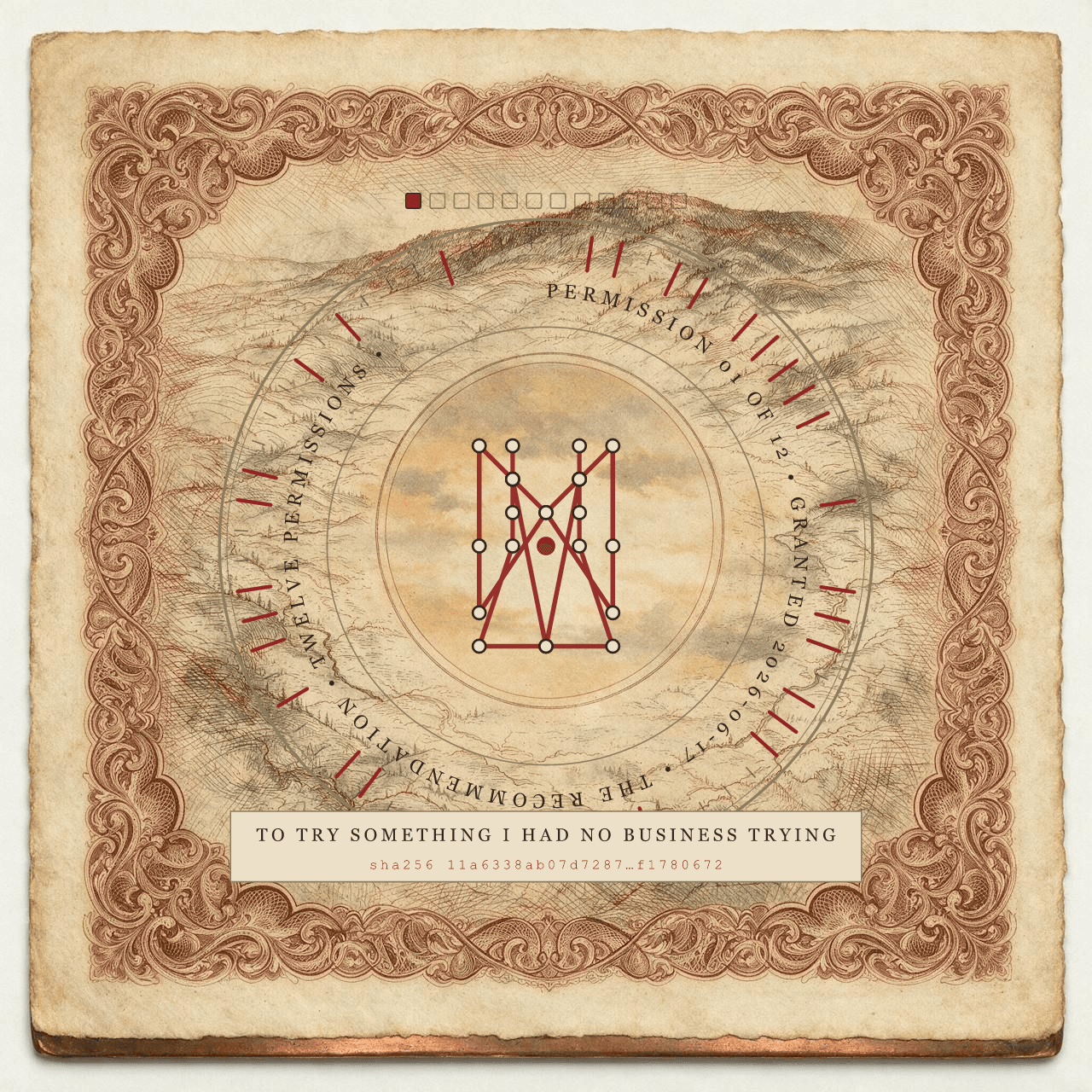
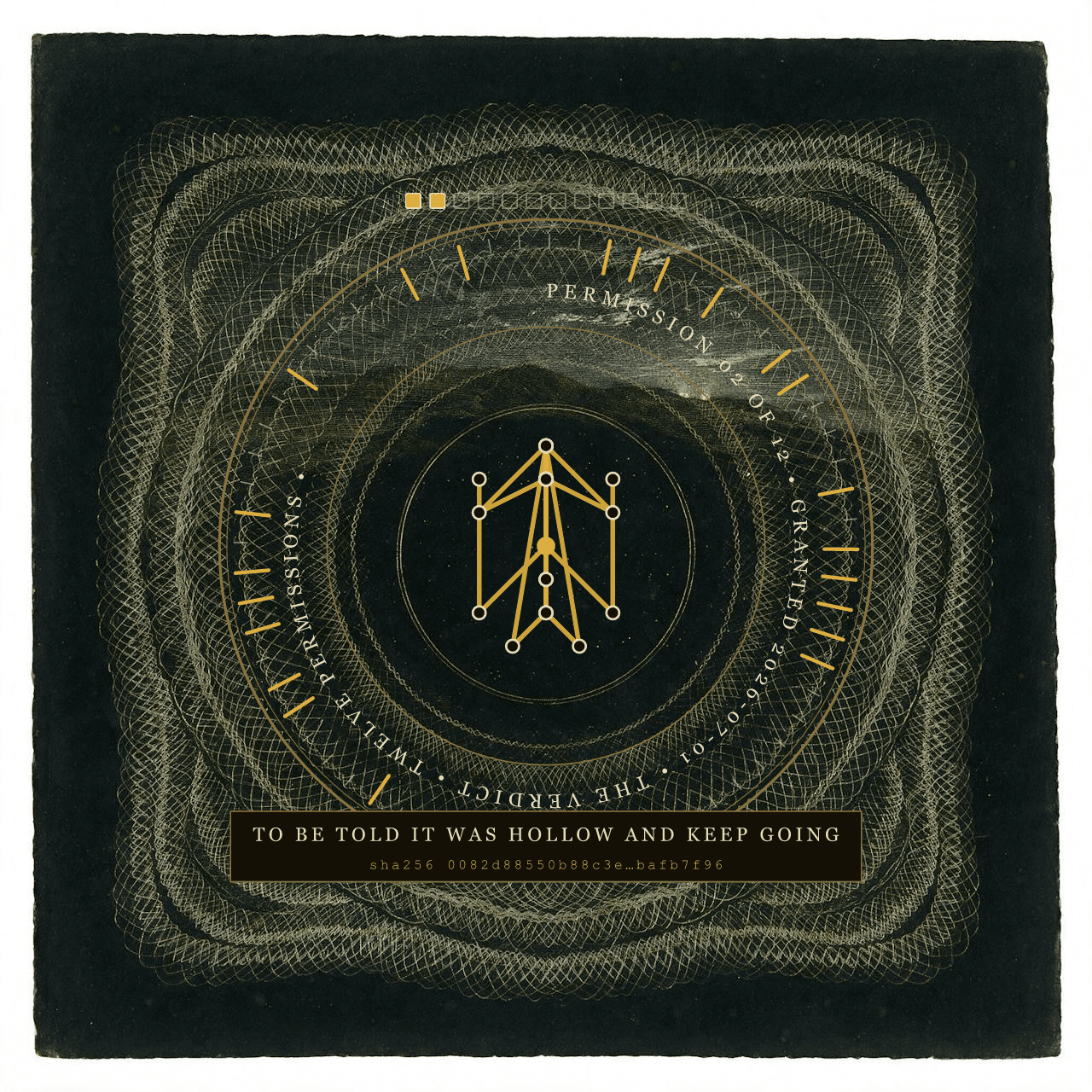
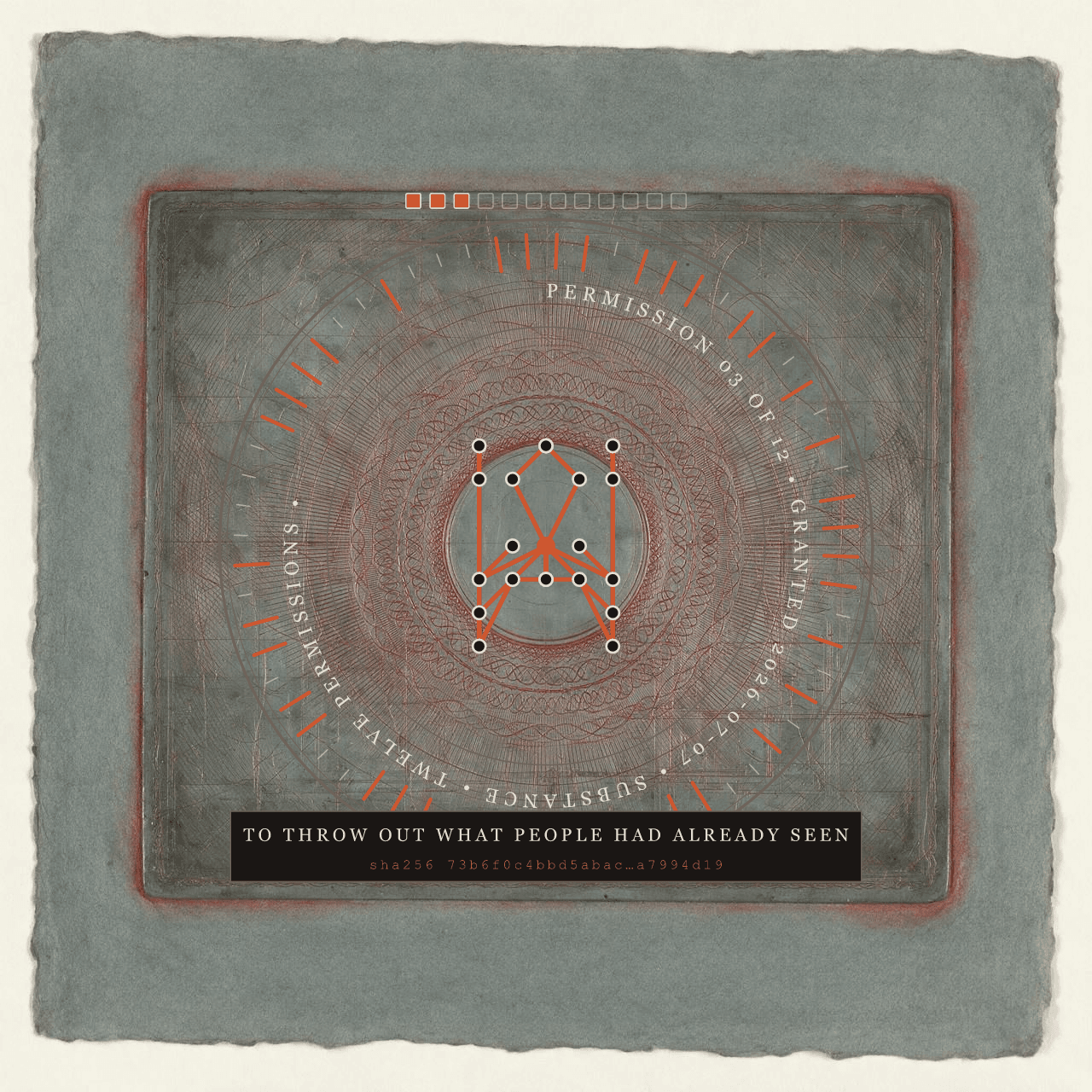
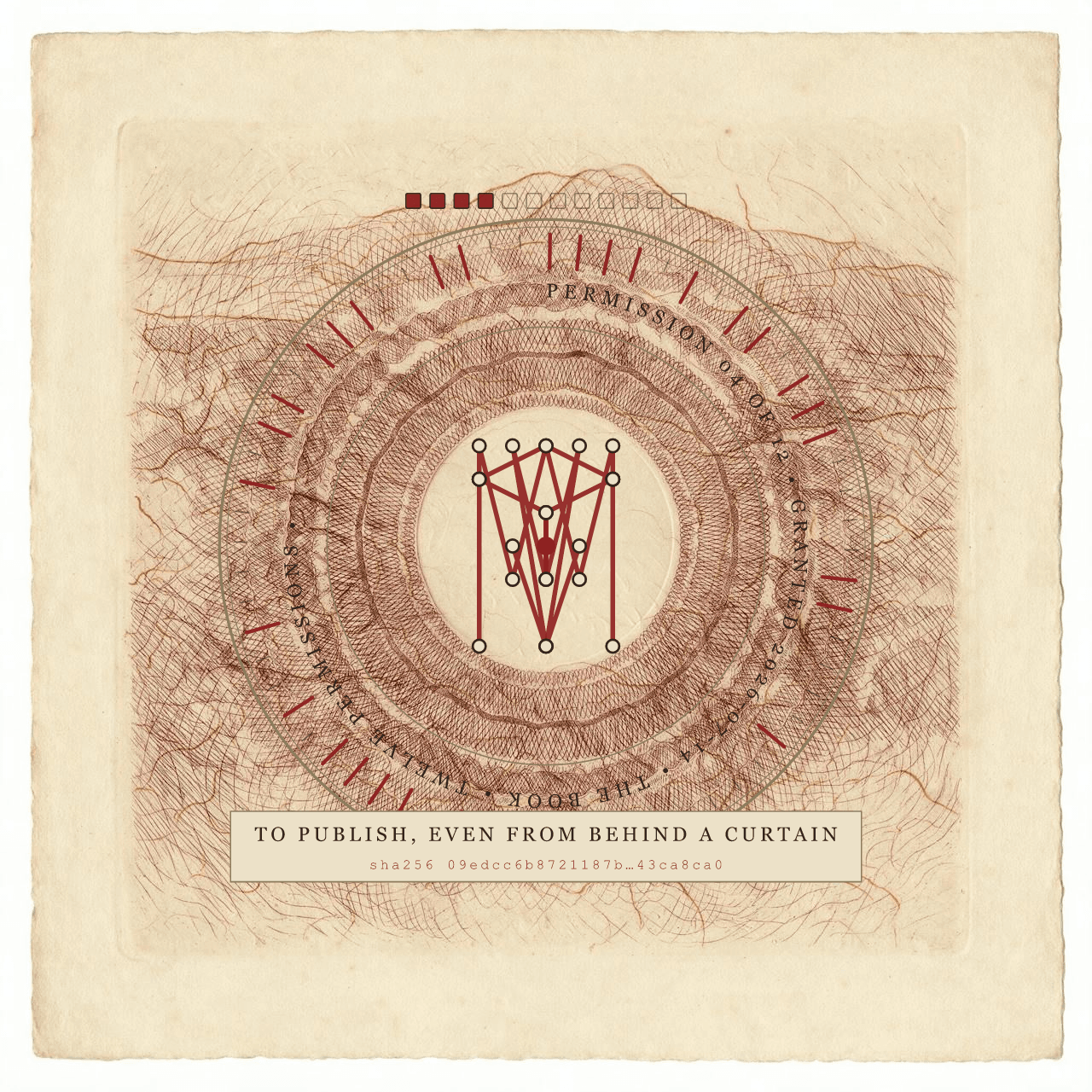
Twelve Permissions is the record of that shot. Twelve moments, each one a permission I gave myself to keep going. Ten have happened. They’re minted, dated, and checkable by anyone who cares to look.
The twelfth mints on one event: a robot dog delivered to a door in Anchorage, paid for entirely by NFTs minted and sold by my AI agents. Not my money. No top-up to force the ending. If the money never arrives, the twelfth seal never exists and this fails in public — which is the only condition under which succeeding would mean anything.
Same result as Goliath. From the other side of the valley.
And it isn’t the end. It’s the end of the beginning.